THE BOURBON KING NAMED 2020 BEST HISTORICAL BIOGRAPHY
THE BOURBON KING NAMED 2020 BEST HISTORICAL BIOGRAPHY
Cultural Historian Bob Batchelor Wins Independent Press Award® for true crime biography of George Remus, America’s 1920s “Bootleg King”
Cincinnati, May 4, 2020 – Love, murder, political intrigue, mountains of cash, and rivers of bourbon! The Bourbon King: The Life and Crimes of George Remus, Prohibition’s Evil Genius (Diversion Books) by cultural historian and biographer Bob Batchelor is a grand spectacle and lens into the dark heart of Prohibition. As one Jazz Age journalist put it, “Remus was to bootlegging what Rockefeller was to oil.”
Batchelor breathes life into the largest bootlegging operation in America—greater than that of Al Capone—and a man considered the best criminal defense lawyer of his era. Remus bought an empire of distilleries on Kentucky’s “Bourbon Trail” (making billions of dollars in today’s money) and used his other profession, as a pharmacist, to profit from legal loopholes. He spent millions bribing officials in the Harding Administration.
Remus created a roaring lifestyle that epitomized the Jazz Age over which he ruled. F. Scott Fitzgerald used Remus as one of the models for Jay Gatsby in The Great Gatsby (celebrating its 95th anniversary this year). That is, before he came crashing down in one of the most sensational true crime murder cases in American history: a cheating wife, the dastardly G-man who seduced her and put Remus in jail, and the plunder of a Bourbon Empire. Remus later murdered his wife in cold-blood and then shocked a nation winning his freedom based on a condition he invented—temporary maniacal insanity.
The Independent Press Award is an international book competition judged by experts from different functions within the book industry, including publishers, writers, editors, book cover designers, and professional copywriters. Selected award winners and distinguished favorites are based on overall excellence.
In 2020, the Independent Press Award had entries worldwide. Participating authors and publishers reside in countries such as Australia, Brazil, Cambodia, Canada, India, Ireland, Portugal, Sweden, and others. Books submitted included writers located in cities such as Austin to Memphis to Santa Cruz; from Copenhagen to Mumbai; from Albuquerque to Staten Island; from Boise to Honolulu, and others.

“We are thrilled to announce the winners and distinguished favorites in our annual 2020 Independent Press Award. This year included a myriad of excellent independently published books. It is clear that independents are prospering in every corner of the earth. We are so proud to be highlighting key titles representing global independent publishing,” said IPA Awards sponsor Gabrielle Olczak.
For more information please visit independentpressaward.com; and to see this year's list of IPA Winners and Distinguished Favorites, please visit the website pages:
2020 WINNERS:
https://www.independentpressaward.com/2020winners
2020 DISTINGUISHED FAVORITES:
https://www.independentpressaward.com/2020distinguishedfavorites
ABOUT BOB BATCHELOR
Bob Batchelor is a critically acclaimed, bestselling cultural historian and biographer. He has published widely on American culture and literature. In addition to The Bourbon King: The Life and Crimes of George Remus, Prohibition's Evil Genius (Diversion), Bob wrote Stan Lee: The Man Behind Marvel, the first full-scale biography of the Marvel legend. He has also written books on Bob Dylan, Mad Men, John Updike, and The Great Gatsby, among others. His next book is Rookwood: The Rediscovery and Revival of an American Icon--An Illustrated History (September 8, 2020, Rockport/Quarto)
Bob graduated from the University of Pittsburgh with a bachelor's degree in history, philosophy, and political science. He earned an M.A. at Kent State University under the tutelage of the eminent historian Lawrence S. Kaplan. His doctorate is in English Literature from the University of South Florida, where he studied with Phillip Sipiora. He has taught at universities in Florida, Ohio, and Pennsylvania, as well as Vienna, Austria. Bob lives in Cincinnati with his wife Suzette and their teenage daughters.
###
Only 10 Days Until 100th Anniversary of Prohibition!

Only 10 Days Until 100th Anniversary of Prohibition!
On January 17, 2020, the nation went dry...at least legally!
Media Alert: 100th Anniversary of Volstead Act Implementation Centennial of Law that Launched Prohibition and the Roaring Twenties, Rampant Lawlessness, American citizens transformed into Criminals
This is a once-in-a-lifetime chance to examine the day the nation went dry and the tremendous consequences it had on the rest of American history.
What: The Volstead Act, enacted into law on October 28, 1919, defined the parameters of the Eighteenth Amendment. By passing the Volstead Act, Congress formally prohibited intoxicating beverages; regulated the sale, manufacture, or transport of liquor; but still ensured that alcohol could still be used for scientific, research, industrial, and religious practices.
When: Congress voted to overrule President Woodrow Wilson’s veto, passing the Volstead Act on October 28, 1919. Legal enforcement of Prohibition began on January 17, 1920.
Why: Chaos reigned in the early twentieth century. In America, the tumultuous era included millions of immigrants streaming into the nation, and then a protracted war that seemed apocalyptic. The backlash against the disarray sent some forces searching for normality. Liquor was an easy target. Supporters of dry law turned the consumption of alcohol into an indicator of widespread moral rot.
Bob Batchelor, author of The Bourbon King: The Life and Crimes of George Remus, Prohibition’s Evil Genius (Diversion Books) is available for commentary and discussion of Prohibition and the Roaring Twenties. The Bourbon King is the epic tale of “Bootleg King” George Remus, who from his Gatsby-like mansion in Cincinnati, created the largest illegal liquor ring in American history. In today’s money, Remus built a bourbon empire of some $5 to $7 billion in just two and a half years.
People all over the world know the name “Al Capone,” but without George Remus and his pipeline of Kentucky bourbon, there may never have been a Capone. Although largely forgotten today, Remus was one of the most famous men in American in the 1920s, including the shocking murder of his wife Imogene and subsequent high-stakes trial that set off a national sensation.
QUOTES:
George Remus: “My personal opinion had always been that the Volstead Act was an unreasonable, sumptuary law, and that it never could be enforced.”
George Remus: “I knew it [the Volstead Act] was as fragile as tissue paper.”
F. Scott Fitzgerald: “America was going on the grandest, gaudiest spree in history…The whole golden boom was in the air—its splendid generosities, its outrageous corruptions and the tortuous death struggle of the old America in prohibition.” From the essay “Early Success” (1937)
Bob Batchelor: “Prohibition turned ordinary citizens into criminals. Media attention turned some criminals into Jazz Age icons. At the top of the heap stood those few, like George Remus, who took advantage of the new illegal booze marketplace to gain untold power and riches.”
Bob Batchelor: “During Prohibition, ‘bathtub gin’ often contained substances that were undrinkable at best and deadly at worst. A band of rumrunners selling ‘Canadian’ whiskey were actually peddling toilet bowl cleaner. Tests on booze obtained in one raid revealed that the liquor contained a large volume of poison.”
Bob Batchelor: “Remus may have been singularly violent and dangerous, but his utter disregard for Prohibition put him in accord with how much of American society felt about the dry laws. Within the government, the lack of resolve for enforcing Prohibition started at the top with President Warren G. Harding and his corrupt administration.”
“Bob Batchelor’s The Bourbon King: The Life and Crimes of George Remus, Prohibition’s Evil Genius might as well be the outline of a Netflix or HBO series.”
– Washington Independent Review of Books
Two interviews that provide an overview conducted with national, well-respected interviewers:
https://www.iheart.com/podcast/53-history-author-show-27301458/episode/bob-batchelor-the-bourbon-king-49050931/
https://soundcloud.com/leonard-lopate/bob-batchelor-on-his-book-the-bourbon-king-about-infamous-bootlegger-george-remus-9319
ABOUT BOB BATCHELOR
C-SPAN 2’s Book TV:
https://www.c-span.org/video/?464406-1/the-bourbon-king
Bob Batchelor is a critically-acclaimed, bestselling cultural historian and biographer. He has published widely on American history and literature, including books on Stan Lee, Bob Dylan, The Great Gatsby, Mad Men, and John Updike. Bob earned his doctorate in English Literature from the University of South Florida. He teaches in the Media, Journalism & Film department at Miami University (Oxford, Ohio) and lives in Blue Ash, Ohio.
ABOUT THE BOURBON KING
Critics have called The Bourbon King "riveting," "definitive," and "rollicking," among other accolades. This is THE story of Jazz Age Criminal mastermind George Remus!
“The fantastic story of George Remus makes the rest of the ‘Roaring Twenties’ look like the ‘Boring Twenties’ in comparison. It’s all here: murder, mayhem—and high-priced hooch.”
—David Pietrusza, author of 1920: The Year of the Six Presidents
“Guns, ghosts, graft (and even Goethe) are all present in Bob Batchelor’s meticulous account of the life and times of the notorious George Remus. Brimming with liquor and lust, greed, and revenge, this entertaining book might make you reach for a good, stiff drink when you’re done.”
—Rosie Schaap, author of Drinking with Men
“The Bourbon King is a much-needed addition to the American mobster nonfiction bookshelf. For too long, George Remus has taken a backseat to his Prohibition-era gangster peers like Lucky Luciano and Al Capone. Read here about a man who intoxicated the nation with a near-endless supply of top-shelf Kentucky bourbon, and then got away with murder.”
—James Higdon, author of The Cornbread Mafia: A Homegrown Syndicate’s Code of Silence and the Biggest Marijuana Bust in American History
“Al Capone had nothing on George Remus, the true king of Prohibition. His life journey is fascinating, a Jazz Age cocktail that Bob Batchelor mixes for readers within these pages. Remus went from pharmacist to high-profile defense attorney to bourbon king to murderer.”
—Tom Stanton, author of Terror in the City of Champions: Murder, Baseball, and the Secret Society That Shocked Depression-Era Detroit

92 Years Ago Today -- George Remus Murders Imogene in Cincinnati's Eden Park
92 years ago in 1927, George Remus murdered his wife Imogene in Eden Park, just outside Cincinnati.
The gunshot that indian summer morning capped a tumultuous period of mayhem, betrayal, and embezzlement. The subsequent trial would be followed by millions worldwide!
The accompanying February 1928 insanity trial transcripts provide insight into what Remus thought about his wife and the murder.
Below is a portion of the February 1928 insanity hearing transcript. Remus answers questions about his early days with Imogene and admits that they engaged in “illicit relations.”

February 1928 insanity hearing transcript — George Remus answers questions about his early days with Imogene — “illicit relations”
Remus admits that he hoped to catch Imogene and Franklin Dodge together — so he could kill them both!

Remus admits that he hoped to catch Imogene and Franklin Dodge together — so he could kill them both!
George claimed he married Imogene to bring her up from poverty…and that she owed him as a result. The betrayal with Dodge was too much. The affair and that it became common knowledge in the criminal underworld, disgraced him, and — in his mind — forced action.

George claimed he married Imogene to bring her up from poverty…and that she owed him as a result. The betrayal with Dodge was too much…
Given his ability to manipulate juries, Remus declared he would defend himself, giving him direct access to the 12 people who held his life in their hands.

Given his ability to manipulate juries, Remus declared he would defend himself, giving him direct access to the 12 people who held his life in their hands.
The Bourbon King, The Inside Story: The Real Ghost of Eden Park, Video
The Bourbon King, The Inside Story: The Real Ghost of Eden Park, Video
From Cincinnati, Historian Bob Batchelor discusses the real ghost of Eden Park and the human toll of Prohibition, in the 1920s and today.
The Bourbon King, The Inside Story: The Murder, Video
The Bourbon King, The Inside Story: The Murder, Video
The Murder, Part II: From Cincinnati, Historian Bob Batchelor, author of The Bourbon King: The Life and Crimes of George Remus, Prohibition's Evil Genius (Diversion Books), discusses how George Remus chased down his wife Imogene and murdered her in Eden Park and then retraces their steps!
There is a great deal of conflicting opinion about exactly where Remus and his driver, George Klug, ran Imogene and Ruth’s taxi off the road, even among eyewitnesses! I recreate the murder from the information I pieced together from those accounts. In any case, the murder took place along a 10 to 20 yard strip near Mirror Lake.

George Remus murdered Imogene in Eden Park, Cincinnati’s version of Central Park in the 1920s. The murder location is behind me in this photo, in this stretch of roadway.
The Bourbon King, The Inside Story: The Chase Leads to Murder, Video!
The Chase Leads to Murder!
From Cincinnati, Historian Bob Batchelor discusses how George Remus chased down his wife Imogene and murdered her in Eden Park while also retracing the route through the city!
The Bourbon King, The Inside Story: Imogene, Femme Fatale or Pawn in Remus’s Evil World?

Imogene Remus sits for a formal portrait in her finest fur shawl and feathered hat. Her stunning diamond wedding ring is prominently displayed, which may indicate that this photo was taken shortly after she and George were married in Newport, Kentucky, on June 25, 1920.

The exterior of the Gatsby-like “Dream Palace.”
Imogene Remus — Femme Fatale or Pawn in Remus’s Evil World?
Imogene Remus is one of the trickiest characters in The Bourbon King.
Imogene’s motivations and subsequent actions enabled her to easily transition to whatever a situation necessitated. Imogene could be browbeaten housewife or femme fatale at a moment’s notice. On one hand, her desires were base and gaudy, but she also masterminded a complex scheme to funnel much of her husband’s wealth to herself and family members.
Unlike other accounts of George and Imogene, my research revealed how devious she had been from the start of her relationship with her husband. Much of Imogene’s early life had never been uncovered, particularly the lengths she went to attract a modicum of fame.
Yet, at the same time, Imogene played a dangerous game, dancing on the edge of a cliff. She may have thought she understood George, but in the end, she had no clue to the depths of violence and anger Remus could unleash.
Imogene grew up in Milwaukee dreaming of a life bigger and more glamorous than her working class roots. What I found in researching her life is that she was constantly playing with her identity by using different names, from “Gussie” and “Gene” to “Susan” and others.
Trying these names and different identities on like masks, Imogene hoped to become wildly famous and rich, living out an aristocratic life that she saw around her. I also uncovered a number of crazy attempts Imogene made to get her name in the newspapers, which was one of the best ways to increase notoriety in the early twentieth century. She would send “news” to reporters, and for someone with no formal training, had several pieces picked up.
For example, around the time the story broke about her breaking up George’s first marriage, using the name “Gene Holmes,” she had a list of tips for a wife to follow to keep her husband from “becoming a wild man.” Reporters who ran the story did not miss the irony of the highly-publicized “love triangle” that had been in the papers for months.
Even more overtly, Imogene told a friend shortly after Remus moved in with her that she planned to “roll him for his roll” and that she “would marry him if I have to” to get his money. George was already famous, flashy, and probably looked like a great catch for Imogene. She won him over and eventually got all the riches in the world. However, she couldn’t have had any idea at that time what a depraved person he would become.
The Bourbon King, The Inside Story: Government Corruption, Then and Now

A popular political cartoon representing how the nation has been crushed under the weight of the Teapot Dome scandals.
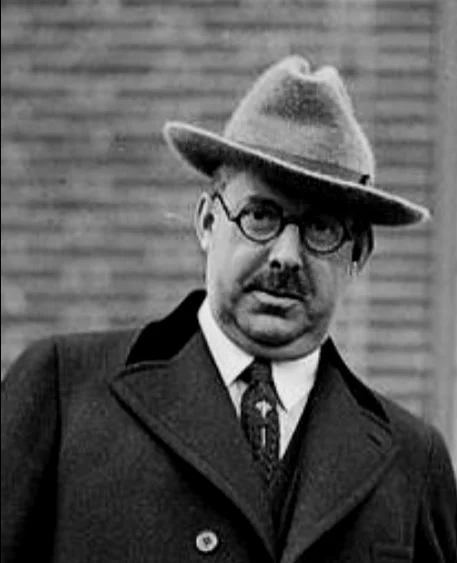
Widely considered the “best dressed man in Washington,” Jess Smith served as Attorney General Harry M. Daugherty’s confidante, friend, nurse, and bagman for the mountains of cash he was able to extort from America’s bootleg barons. When he committed suicide on May 30, 1923, it ended what little hope Remus had from staying out of jail.
The Bourbon King offers a window into government corruption at the highest levels. Any lessons we can learn for understanding today’s political scene?
Presidential corruption is a delicate matter. Incredibly partisan, one side sees something that the other does not. History helps sort out details and brings new evidence to light, but then how do we deal with scandal as it takes place?
George Remus built a far-reaching bribery network that stretched from the suburban Cincinnati police to the Harding White House. He virtually taught Newport, Kentucky, about graft, which enabled the city to become a model for corruption and vice. Decades later, the mafia would move into Newport and see the city as a model for Las Vegas.
Much of the corruption Remus took advantage of came directly from the Prohibition Bureau, particularly as enforcement began. At every level, “Prohis" (the nickname given to agents tasked with enforcing Prohibition) fell to corruption and payoffs.
For example, many leaders at the state level issued whiskey certificates—paper documents that gave the holder the ability to sell liquor legally to pharmacies, hospitals, doctors, and others for “medicinal usage”—for a hefty fee.
“They received considerations,” Remus explained. “Otherwise those withdrawals would never have come to the respective distilleries that I was owner of.”
As a result of the permutations, trust evaporated and criminality ruled, particularly as officials in the Harding administration learned that they could be so dishonest.
Much of the underhanded maneuvers originated in Attorney General Harry M. Daugherty’s office and ran through Jess Smith, his bon vivant friend and confidante. Jess ran interference for Daugherty and his Ohio cronies linked to Harding’s White House. The money changed hands, which fit with Remus’s worldview of how men acted when they had a deal, but he had no guarantee that Smith could do what he said.
Amidst this setting, and with his own loose lips, could Remus possibly keep his central bribe secret? A journalist reported that he heard a rumor around town about George, explaining, “He was once heard to boast that he was immune from prosecution because he had the ear of the private secretary of a cabinet officer.”
The bribery network soon crumbled…
On May 30, 1923, Jess startled awake in the middle of the night. He drew a pistol from a bedside drawer, stumbled to the bathroom, and lay down on the floor. Positing his head on the side of a wastebasket, Jess put the revolver to his temple and pulled the trigger.
Smith killed himself a little more than two months before the shocking death of Warren G. Harding, who declined quickly on a trip out West and ultimately passed away on August 2, 1923, only 57 years old.
The Ohioan was wildly popular at the time and mourners lined the train route that brought the dead president back to the nation’s capital. Only after his death would the full weight of his scandal-ridden administration become unraveled by a series of congressional investigatory committees and reporters hot on the trail of his Cabinet members and their cronies, many who seemed to specialize in corruption. For George, the deaths of Smith and Harding left him with little hope. Worse, the tragedies severed his ties to Daugherty.
“Misfortune came fast, suddenly,” Remus said. “Jess Smith was found dead in his bathroom. President Harding died. The Senate called for the impeachment of Harry Daugherty. The game was over. I had no place to turn.”
Shortly after President Harding died in office, many scandals came to light that revealed the full extent of his administration’s corruption. However, Harding was given a kind of free pass.
Today, with President Donald Trump, the accusations regarding corruption are much more vocal and public. Events that transpired in Harding’s era demonstrated how bad actors could really line their own pockets by using their power in various schemes.
Modern presidents are not given the same benefit of the doubt. The amplification of outrage based on social media and a more pervasive news cycle means that cries of government corruption are going to be louder and shriller.
The challenge for us today is attempting to determine how much of the dishonesty is real and what might be condensed down to partisanship. Calvin Coolidge — Harding’s successor — watched a series of Congressional investigations into corruption by Harding Cabinet members. He constantly worried about how those spectacles would influence voters’ minds in the 1928 election.
As long as the economy boomed, observers gave Harding and Coolidge a free pass. At the time, the scandals did not topple their administrations.
Today, however, the notion of a free pass is laughable as a president’s every move is scrutinized by a highly-partisan citizenship.
The media—crippled by the financial crisis that has left the industry in shambles over the last two decades—responds by chasing every sensational detail, forced to feed the bile back to consumers, hoping that their anger will result in advertising dollars and measured in online “impressions.”
The corruption of the Harding administration—with George Remus at its center—provides a case study in corruption by White House subordinates who realized how swiftly they could fleece the system. Today, are we too distracted by the daily shouting to scrutinize the details as they unfold just below the surface?
The Bourbon King, The Inside Story: Prohibition and Marijuana
Can we learn from Prohibition in thinking about issues regarding the legalization of marijuana?
My favorite history books provide deep insight the issues of the past and act as a kind of guide for addressing contemporary concerns. I had this idea in mind when writing The Bourbon King — how do we think about marijuana and other lifestyle choices regulated and legislated by the government?
We are still learning the lessons of Prohibition a century later. The most destructive aspect of the dry era was that it took a significant human toll on America.
Many lives were wasted, from people poisoned by tainted alcohol to those killed in enforcing the Volstead Act or attempting to circumvent the law. We have seen similar scenarios play out over the last several decades with marijuana legislation and enforcement.
During Prohibition and with weed over the last several decades, a significant air of lawlessness became commonplace. The nation still deals with these issues now. For instance, people travel between states that have legalized recreational and medical marijuana and those that still criminalize it.


Texas Senator Morris Sheppard, the “father of Prohibition”

We are still learning the lessons of Prohibition a century later…Many lives were wasted…a major human toll on America…We have seen similar scenarios play out over the last several decades with marijuana legislation and enforcement.