30% OFF AT BLOOMSBURY WEBSITE -- 2025 HOLIDAY SALE

Stan Lee: A Life for just $11.86 at Bloomsbury.com

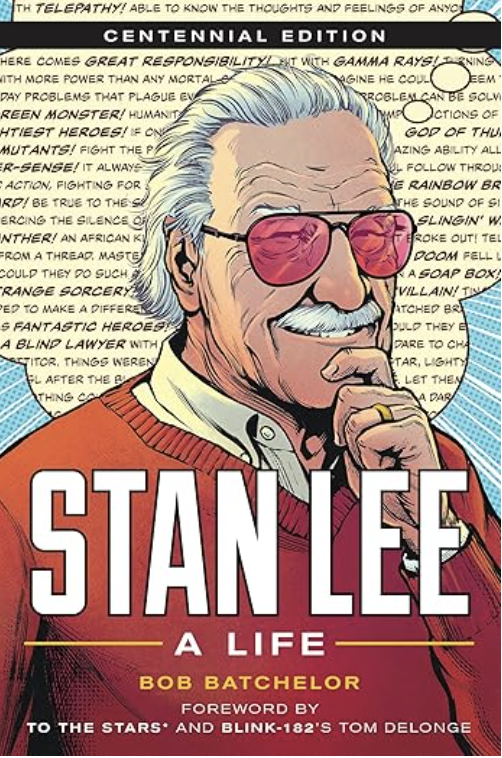
Stan Lee: A Life by award-winning cultural historian Bob Batchelor

“Fascinating…Great work!” — Max Foizey, “Max on Movies,” The Big 550 KTRS, St. Louis

Stan Lee: A Life traces the icon’s journey from Depression-era New York to his reinvention as Marvel’s tireless ambassador, exploring his creative breakthroughs within the currents of American history and media.

“Respectful, well-sourced … may be the best of the bunch.” – Booklist

“Exceptionally well written…an extraordinary biography.” – Midwest Book Review

In Stan Lee: A Life, Batchelor explores how Lee and his collaborators transformed comics through serialized storytelling, moral complexity, and a humanized superhero—innovations that later powered the Marvel Cinematic Universe and cemented Lee’s status as a cross-media icon.

STAN LEE ENTERS THE COMIC BOOK INDUSTRY

A Little Mystery and Uncertainty Surround Young Stan’s Job at Timely Comics

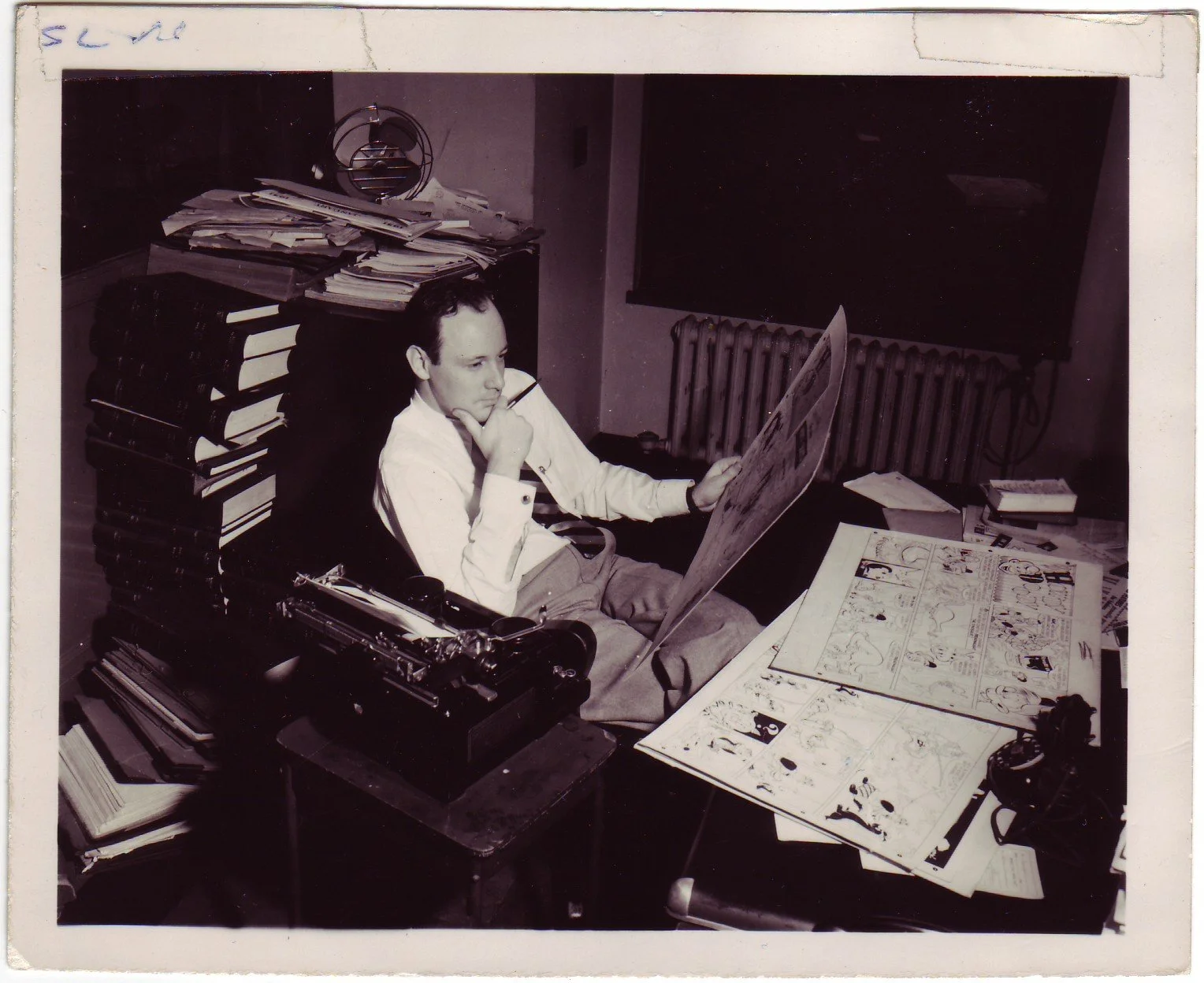
Many episodes in Stanley Lieber’s early life are shrouded in uncertainty. How the teenager bounded from Clinton High School to Joe Simon and Jack Kirby’s assistant at Timely Comics involves both a bit of mystery and a touch of mythmaking.

Courtesy of Stan Lee Papers, Collection Number 8302, American Heritage Center, University of Wyoming.

There are several versions of his Timely Comics origin story. One account begins with his mother Celia. Clearly she put her hopes in her oldest son, particularly since her faith in her husband nearly led the family to ruin. Here we have Celia telling Stanley about a job opening at a publishing company where her brother Robbie worked. Without delay, the young high school grad shows up at the McGraw-Hill building on West 42nd Street, but knows little about the company or comic books.

With Robbie’s prodding, Simon explains the business and how comic books are made. He then offers the teen a job. Basically, he and Kirby are so frantic and overworked, particularly with their new hit Captain America, that they just need someone (anyone, really) to provide an extra set of hands.

Robbie Solomon is also at the center of a different account (here the main player), essentially a conduit between Simon and Timely owner Martin Goodman. In addition to being Celia Lieber’s brother, Robbie married the publisher’s sister Sylvia. Goodman surrounded himself with family members, despite the imperious tone he took with everyone who worked for him. Receiving Robbie’s stamp of approval (and the familial tie) made the boy’s hire fait accompli. Simon, then, despite what he may or may not have thought of the boy, basically had to take Leiber on. “His entire publishing empire was a family business,” explained historians Blake Bell and Michael J. Vassallo.[i] Solomon had a strange job – a kind of in-house spy who ratted out employees not working hard enough or playing fast and loose with company rules.

While the family connection tale is credible and plays into the general narrative of Goodman’s extensive nepotism, Lee offered a different perspective, making it more of a coincidence. “I was fresh out of high school,” he recalled, “I wanted to get into the publishing business, if I could.” Rather than being led by Robbie, Lee explained: “There was an ad in the paper that said, ‘Assistant Wanted in a Publishing House.’”[ii] This alternative version calls into question Lee’s early move into publishing – and throwing up for grabs the date as either 1940, which is usually listed as the year of his hiring, or 1939, as he later implied.[iii]

Lieber may have not known much about comic books, but he recognized publishing as a viable option for someone with his skills. He knew that he could write, but had no way of really gauging his creative talents. Although Goodman was a cousin by marriage, he did not have much interaction with his younger relative, so it wasn’t as if Goodman purposely brought Lieber into the firm. No one will ever really know how much of a wink and nod Solomon gave Simon or if Goodman even knew about the hiring, though the kid remembered the publisher being surprised the first time he saw him in the building.

The teen, though bright, talented, and hard working, needed a break. His early tenure at Timely Comics served as a kind of extended apprenticeship or on-the-job training at comic book university. Lieber was earnest in learning from Simon and Kirby as they scrambled to create content. Since they were known for working fast, the teen witnessed firsthand how two of the industry’s greatest talents functioned. The lessons he learned set the foundation for his own career as a writer and editor, as well as a manager of talented individuals.

By Marvel Comics/Marvel Entertainment.The original uploader was Iftekharahmed96 at English Wikipedia..Later version(s) were uploaded by DatBot at en.wikipedia. - Transferred from en.wikipedia to Commons.(Original text : http://marvel-microheroes.wikia.com/wiki/File:Timely_Comics_logo.png), Public Domain, https://commons.wikimedia.org/w/index.php?curid=132830648

NOTES
[i] Blake Bell and Michael J. Vassallo, The Secret History of Marvel Comics: Jack Kirby and the Moonlighting Artists at Martin Goodman’s Empire (Seattle: Fantagraphics, 2013), 98.

[ii] Stan Lee interview, “Interview with Stan Lee (Part 1 of 5),” IGN, June 26, 2000, http://www.ign.com/articles/2000/06/26/interview-with-stan-lee-part-1-of-5 (accessed June 1, 2016).

[iii] Lieber’s hiring date never been conclusive. In an unpublished draft of the history of Marvel, Lee wrote “early 1940,” but other publications and places he says or infers 1939. Lee, “History of Marvel (Chapters 1, 2, 3),” Unpublished, 1. Marvel Comics -- History (Draft of “History of Marvel Comics”) 1990 Box 5 Folder 7, Stan Lee Papers.

THE GREAT GATSBY IN THE HEADLINES -- $2.99 SALE ON THE GATSBY CODE

The Gatsby Code eBook just $2.99

When The Great Gatsby surges back into the news, we are reminded once again that America’s most shimmering and elusive novel still haunts the culture—class, ambition, desire, the fragile scaffolding of the American dream.

The Gatsby Code: A Century of Dreams and Disillusion by award-winning cultural historian Bob Batchelor

To celebrate the conversation (and help more readers join it), Tudor City Books has dropped the price of eBook to $2.99 on Amazon for a limited time.

If you’ve been meaning to revisit Gatsby’s world—or explore why the novel keeps gripping us a century on—now’s the moment. More than just a literary analysis or criticism, The Gatsby Code is a century-spanning cultural biography of a novel and its enigmatic protagonist. From Gatsby’s humble roots as James Gatz in North Dakota to his glittering rise and tragic fall in West Egg, Bob Batchelor decodes the psychological and sociological layers of Fitzgerald’s antihero and the America he both embraced and exposed.

Bob Batchelor has written a powerful study of The Great Gatsby and its ability to resist the erosion and forgetfulness of time...and discovers a Gatsby we had never seen before—wounded and alone. — Jerome Charyn, author of Maria La Divina, a novel of Maria Callas

Bottom line: Gatsby’s back in the conversation—jump in while the eBook is just $2.99. Get the The Gatsby Code eBook today!

Also in Book News: Stan Lee: A Life (Paperback) Out in Time for the Holidays!

Bloomsbury Academic has released the paperback, Expanded Centennial Edition of Stan Lee: A Life—a full portrait of Marvel’s tireless ambassador from Depression-era New York to global icon. Early praise called it “respectful, well-sourced…may be the best of the bunch” (Booklist) and “exceptionally well written…an extraordinary biography” (Midwest Book Review).

Stan Lee: A Life by Bob Batchelor, Foreword by Blink-182 and To The Stars* icon Tom DeLonge

Paperback details: 264 pages • ISBN-13: 979-8881808860 • List: $16.95
Order & save: Use code GLR BD8 at Bloomsbury.com for 20% off.

About Bob Batchelor

I write about the people and stories that shape American culture—icons who cross generations and mediums. I’ve published 16 books (and edited 19) on subjects ranging from The Great Gatsby and Mad Men to Jim Morrison and Prohibition kingpin George Remus. My work has appeared in or been featured by the New York Times, BBC, Los Angeles Times, The Guardian, PBS, and NPR. I’m an Assistant Professor of Communication, Media, & Culture at Coastal Carolina University. More at bobbatchelor.com.

BOB BATCHELOR’S STAN LEE: A LIFE ARRIVES IN PAPERBACK

Stan Lee’s extraordinary life was as epic as the superheroes he created, from the Amazing Spider-Man to the Mighty Avengers. His ideas and one-of-a-kind voice and image are at the heart of global culture, loved by millions of fans across the globe.
Bloomsbury Academic will release the paperback of Stan Lee: A Life by award-winning cultural historian Bob Batchelor on October 30, 2025. Hailed as the “definitive” biography of Marvel’s iconic creator and leader, the book offers a full portrait of Lee’s remarkable, nine-decade career and global impact.

Read more

THE GATSBY CODE: A CENTURY OF DREAMS AND DISILLUSION -- PRE-ORDER EBOOK

In The Gatsby Code, cultural historian Bob Batchelor—award-winning author of acclaimed biographies and expert on American mythmaking—offers a masterful deep dive into one of literature’s most enduring icons: Jay Gatsby. As The Great Gatsby turns 100, Batchelor delivers a revelatory chronicle of the novel’s past, present, and future impact, weaving cultural history, literary analysis, and philosophical inquiry into a riveting exploration of why Gatsby still matters.

Read more

THE AUTHENTIC LEADER: FAQs

The Authentic Leader: The Power of Deep Leadership in Work and Life by award-winning cultural historian and biographer Bob Batchelor explores the concept of deep leadership, which emphasizes authenticity, transparency, and empathy in the workplace and beyond. Batchelor argues that traditional leadership models, often characterized by command-and-control styles, are no longer effective in today's rapidly changing work environments.

Read more

BOB BATCHELOR LAUNCHES NEW PUBLISHING VENTURE: TUDOR CITY BOOKS

International bestselling author Bob Batchelor, renowned for his expertise in cultural history and biography, has launched Tudor City Books, a new publishing company headquartered in Raleigh, North Carolina. Specializing in a range of subjects, including crime fiction, entertainment and pop culture history, memoir, and biography, Tudor City Books aims to bring exceptional works to a broader audience.

Read more

ROADHOUSE BLUES: MORRISON AND THE DOORS LIKE YOU'VE NEVER SEEN BEFORE!

Reviews of ROADHOUSE BLUES

 Roadhouse Blues: Morrison, the Doors, and the Death Days of the Sixties won the 2023 IPA Book Award in Music and has been lauded by critics, readers, and Doors aficionados across the globe.

2023 Independent Press Award for Roadhouse Blues

REVIEWS

“Fascinating, informative, extraordinary, and essential reading for the legions of Jim Morrison fans.” – Midwest Book Review

“Bob Batchelor writes with great eloquence and insight about the Doors, the greatest hard-rock band we have ever had, and through this book, we plunge deeply into the mystery that surrounds Jim Morrison. It is Batchelor’s warmth and compassion that ignites Roadhouse Blues and helps explain Morrison’s own miraculous dark fire.” – Jerome Charyn, PEN/Faulkner Award finalist

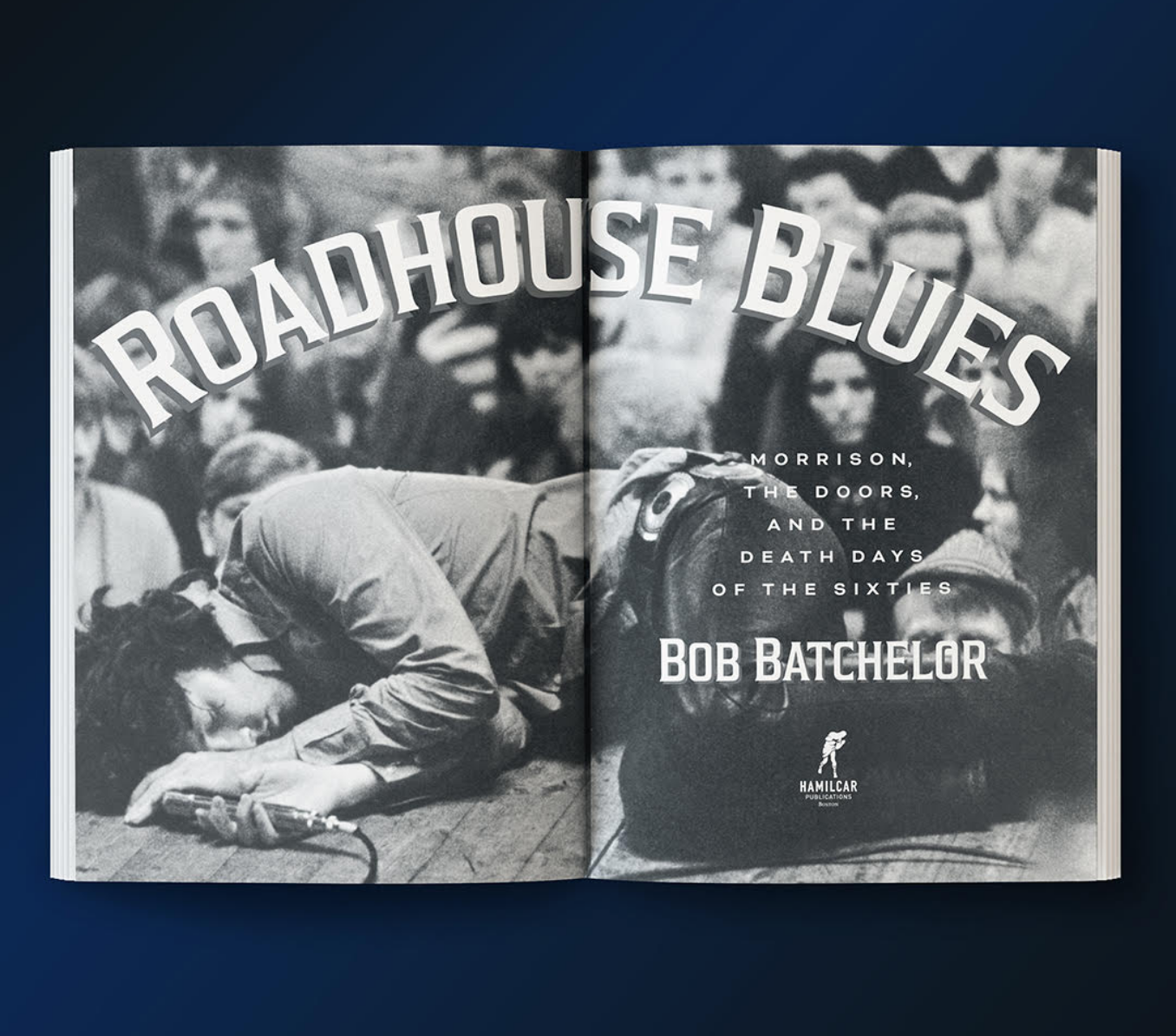
Splash page for Roadhouse Blues, designed by the eminent Brad Norr

“The most important book for Doors fandom since No One Here Gets Out Alive—and incomparably better! Grouped with Ray, Robby, and John’s books, this is the fourth gospel for fans of The Doors.” – Bradley Netherton, The Doors World Series of Trivia Champion and host of the “Opening The Doors” podcast

“Batchelor writes well and his narrative flows smoothly. His work is an insightful look at the Doors as creative artists and a compelling portrait of Morrison.” – Thomas Hauser, Pulitzer Prize and National Book Award nominee

“Smart, engaging…Batchelor has a technique and perspective that runs through his work: paint a vivid description of what happened, but then, more than a mere journalist or biographer, delve into how it happened and then why it happened. The what is documentarian; the how, and especially the why, require the kind of analysis with imagination that Roadhouse Blues provides.” – Jesse Kavadlo, PopMatters

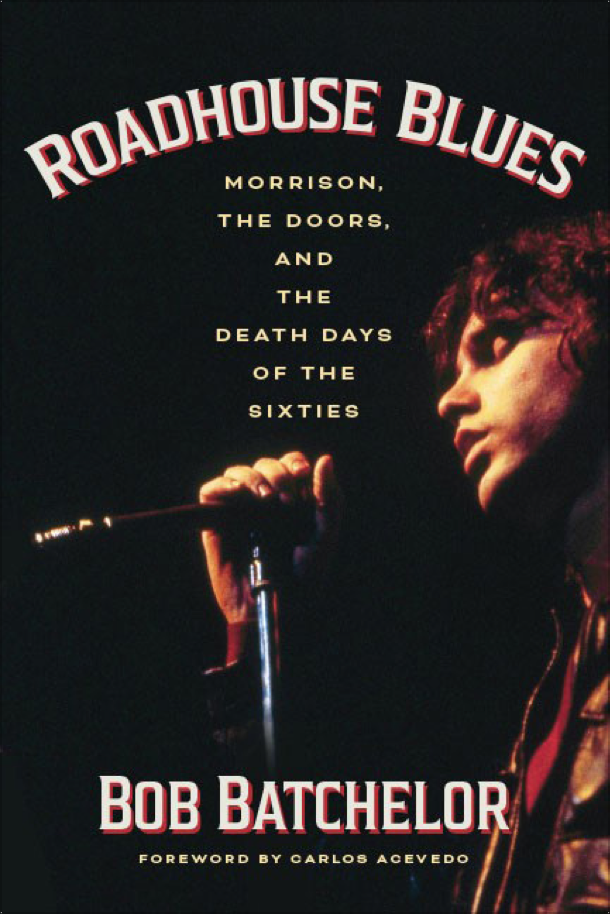
Roadhouse Blues, published by Hamilcar Publications

JIM MORRISON'S LAST ALBUM, L.A. WOMAN RELEASED 53 YEARS AGO TODAY!

Blues- and Jazz-Infused Music From America’s Greatest Rock Band; Excerpt from Roadhouse Blues

The Doors released L.A. Woman on April 19, 1971, and Jim Morrison would be dead about 10 weeks later. The last album during his lifetime solidified the band’s standing and the singer’s legacy as an iconic figure in rock ‘n roll history.

Roadhouse Blues author Bob Batchelor with L.A. Woman

EXCERPT FROM ROADHOUSE BLUES: MORRISON, THE DOORS, AND THE DEATH DAYS OF THE SIXTIES (HAMILCAR PUBLICATIONS)

While incarceration loomed, Jim and the band got back into the studio. Ray, Robby, and John understood the seriousness of the situation. Densmore claimed that saving Jim was the band’s first priority: “Fuck, man, if we don’t get an album or two more out of Jim, so what? Maybe we’ll save his life.” They thought the creative process would reverse the spiral. The strategy had worked with Morrison Hotel.

Ironically, the album that would later be named after their adopted home—L.A. Woman—would be made without longtime producer Paul Rothchild. He hated the songs the band planned to use for the new record, telling them, “It sucks…it’s the first time I’ve ever been bored in a recording studio in my life.” At a dinner, according to Hopkins and Sugerman, Rothchild told them that they should produce themselves with Botnick’s assistance.

Although Rothchild may have disliked the tracks and sound, some felt that he still mourned Janis and was afraid to watch Jim’s journey down a similar path toward destruction. He also wanted a more controlled sound and believed the band couldn’t deliver, based on Jim’s commitment to partying and the tension that it caused with Ray, Robby, and John.

Rothchild had a point. Krieger remembered Jim’s drinking, saying, “When he got too drunk, he would become kind of an ass. It got harder and harder to be close with him.” The band kind of lined up on one side— on the other, Jim and his increasing number of drinking buddies and hangers-on. In his memoir, Ray called them “reprobates…slimeballs, and general Hollywood trash.”

Still, Botnick agreed to co-produce the next album, and the band went to work to perfect the demos and create several more. They set up shop at the Doors offices at 8512 Santa Monica Boulevard, which felt safe and secure for the band. With Jim across the street at the fleabag Alta Cienega Hotel, Robby remembered that the singer was reenergized by the process. Like the previous album, Botnick wanted to get a live feel. He said, “Go back to our early roots and try to get everything live in the studio with as few overdubs as possible.”

The Doors perform at the Hollywood Bowl

Continuing the creative process that had worked on Morrison Hotel, the band wrote songs together, often from poems Jim had been working on over the years. Adding to the new vibe, they used Elvis’s bassist Jerry Scheff and rhythm guitarist Marc Benno to add a deeper, more lush tone. Morrison sang in the adjoining bathroom to get the sound he wanted. To capture the desired live spirit, they didn’t do many takes and kept overdubs to a minimum.

Morrison’s concept of L.A. Woman centered on imagining the city as a sexy woman, his way to pay homage to the “City of Lights.” They also continued to explore what it meant to live on the West Coast and in the contemporary world. The sound was expansive, more alive than what they had done recently, despite the weight of Jim’s conviction.

The title track “L.A. Woman,” according to Densmore, epitomized the new sound, particularly Jim’s anagram for his name. “‘Mr. Mojo Risin’ is a sexual term,” the drummer explained. “I suggested that we slowly speed the track back up, kind of like an orgasm.” For Robby, it was the teamwork that pulled the best work from the band. “The title track was distilled from jam sessions, with all of us contributing equally,” he remembered. “Jim started with a handful of lines and added lyrics as he went while John kept it interesting with time changes and Ray and I harmonized on the melody and traded solos.”

In 2022, the editors at Bass Player named the bassline of “L.A. Woman” one of the forty greatest of all time. “True to the production values of the day, Ray Manzarek’s throbbing keyboard bass is all low frequencies and no mids, adding to its thunderous presence,” they said. That unforgettable sound “takes everything that was best about The Doors—acid-drenched psychedelia, a threatening blues edge and that era-defining drone—and anchors it all with a rock-solid bassline.” The enduring success of the song and its ranking among the best ever recorded is a demonstration of what the Doors could still create, particularly in their stripped-down, blues-infused era.

Despite the stress Jim experienced while putting the album together, the power of his vocals propelled the record. Morrison sounded lively—perhaps even sober—between takes. “I don’t follow orders. I’m just a dumb singer,” he playfully told his bandmates during one interval. Yet under Botnick’s guiding hand, songs like “L.A. Woman” came together, as the producer explained, with “a little bit of woodshedding.”

According to Robby, much of the beauty of “L.A. Woman” came from how he worked with Jim to bring the vocals and guitar into sync. “During the verses, I do these little answer lines to Jim’s vocals. That was just a natural thing he and I would do. He’d sing something and I’d respond.” The improvisation gave the song a timeless vibe, ramping up the power of the live feel. If you close your eyes, you can feel the sun on your face and hear the motor roaring as you’re chugging down the Pacific Coast Highway. The glint off the ocean is blinding, but the air is clean, and the grit of the city is in the rearview mirror.

As a tribute to the great jazz pianist and composer Duke Ellington, Krieger wrote “Love Her Madly,” whose title comes from the way the Duke ended his shows by telling audiences: “We love you madly!” It took the rest of the band, however, to work it into the Doors groove. “We workshopped it together,” the guitarist said.
Roadhouse Blues by cultural historian and biographer Bob Batchelor

For the band, working collectively always worked best. “We tickled them and cajoled them and pampered them, and whipped them into line,” Ray said of those tracks. “It was like the old days.” L.A. Woman was a testament to that collaborative spirit.